- Home
- News
- Other Information
- 【Media ...
【Media Interview】NUK and National Education Radio Present Knowledge in the Community — Language Center Director Jyh-wen Chern: Language Is a Key to Understanding the World
Featured News | Media Interview
NUK and National Education Radio Present Knowledge in the Community
Language Center Director Jyh-wen Chern: Language Is a Key to Understanding the World
Published: June 16, 2026
Original News Source
National University of Kaohsiung Home > Announcements / Campus Safety / Highlights
Jyh-wen Chern, Director of both the Language Center and the Continuing Education Center at National University of Kaohsiung, was interviewed by Zhu Ruyu (Ruby), host of Tea Time on National Education Radio's Kaohsiung station. In the Knowledge in the Community segment, he shared his educational journey from an international trade student to a professor of Japanese and discussed language education, intercultural exchange, the promotion of second foreign languages, Thai proficiency testing, and digital learning.
In his view, language is more than a means of communication: it is a key to understanding the world. The central value of language education lies in understanding cultures, broadening perspectives, and developing the ability to communicate across cultures.

Director Jyh-wen Chern interviewed on National Education Radio's Tea Time.
From Dreams of International Trade to Japanese: Finding a Distinctive Strength
Reflecting on his education, Chern recalled with a smile that English was his strongest subject in junior high school, while mathematics and science never came easily. After high school, he entered the Department of International Trade at Takming Junior College of Commerce, hoping to use his English skills in international trade. During his studies, however, he noticed that English speakers were plentiful, whereas people with Japanese skills were relatively few. He therefore decided to study Japanese and develop an additional area of expertise.
After first encountering Japanese at junior college, Chern gradually discovered a strong interest in language learning. He continued his studies and, while at university, returned to a language school to teach Japanese. He explained that language learning is not simply memorization but a system with logic and patterns; with the right methods, learners can understand and use it effectively. Seeing students quickly grasp lessons drawn from his many years of learning also helped him decide to pursue a career in education.
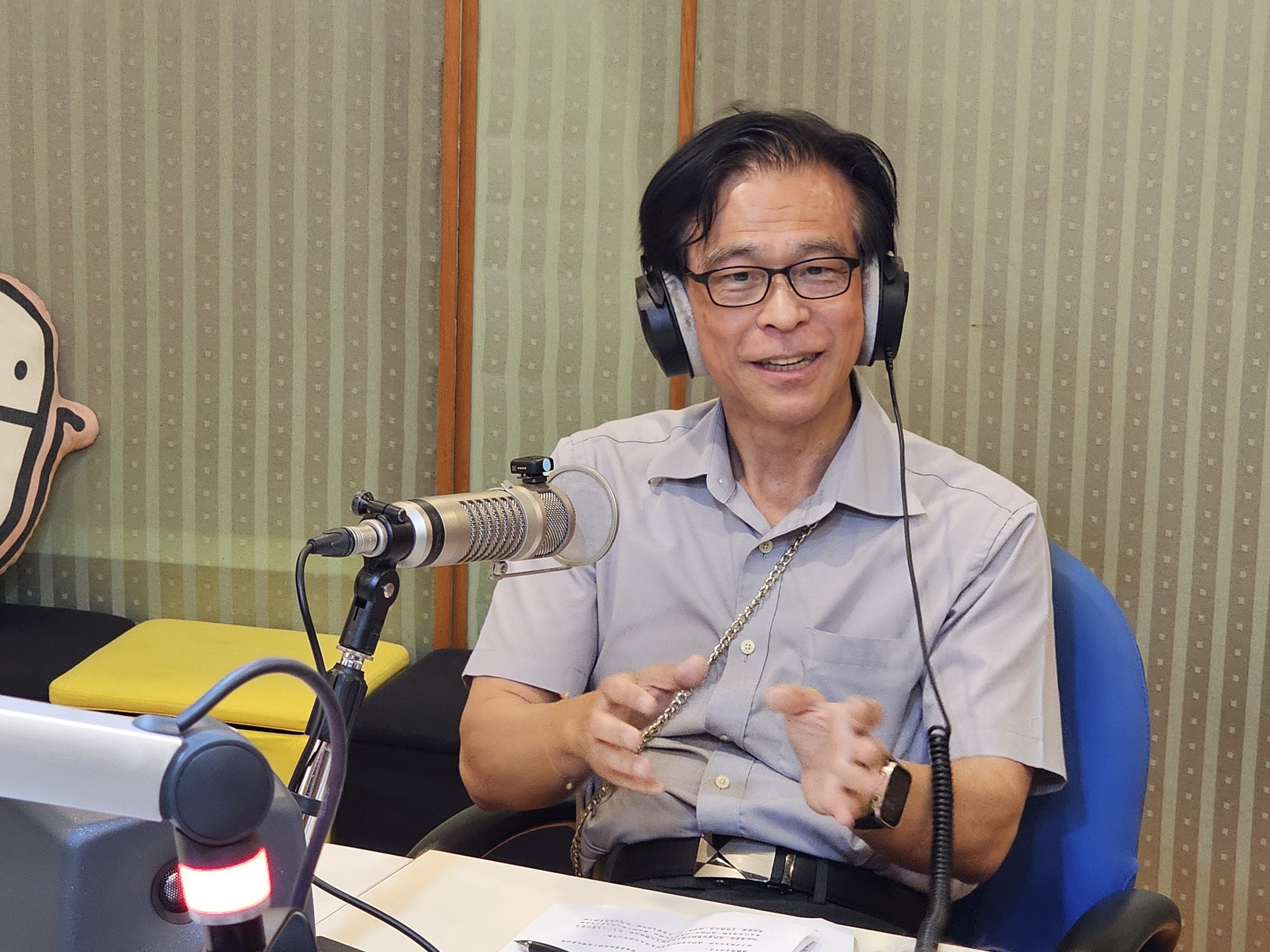
Director Chern shares his journey from international trade to Japanese teaching and research.
Challenges While Studying in Japan: Finding a Research Focus Through a Mandarin-Speaker's Perspective
To deepen his expertise, Chern went to Tohoku University in Japan for his master's and doctoral degrees. Soon after arriving, he experienced the challenges of an academic environment for the first time. Surrounded by outstanding students and researchers from many places, he needed more time to understand and absorb classroom discussions and academic exchanges. This prompted him to reconsider his own strengths and future direction.
During his doctoral research, Chern increasingly focused on how native Mandarin speakers learn Japanese and on teaching research related to their learning. Japanese scholars, he felt, had a deep foundation in Japanese-language research, whereas his greatest strength was his ability to observe learning difficulties from a Mandarin-speaker's perspective. This helped him establish his own research focus. He also encourages students to discover their distinctive qualities and strengths, rather than simply imitating others, so that they can develop a path of their own.
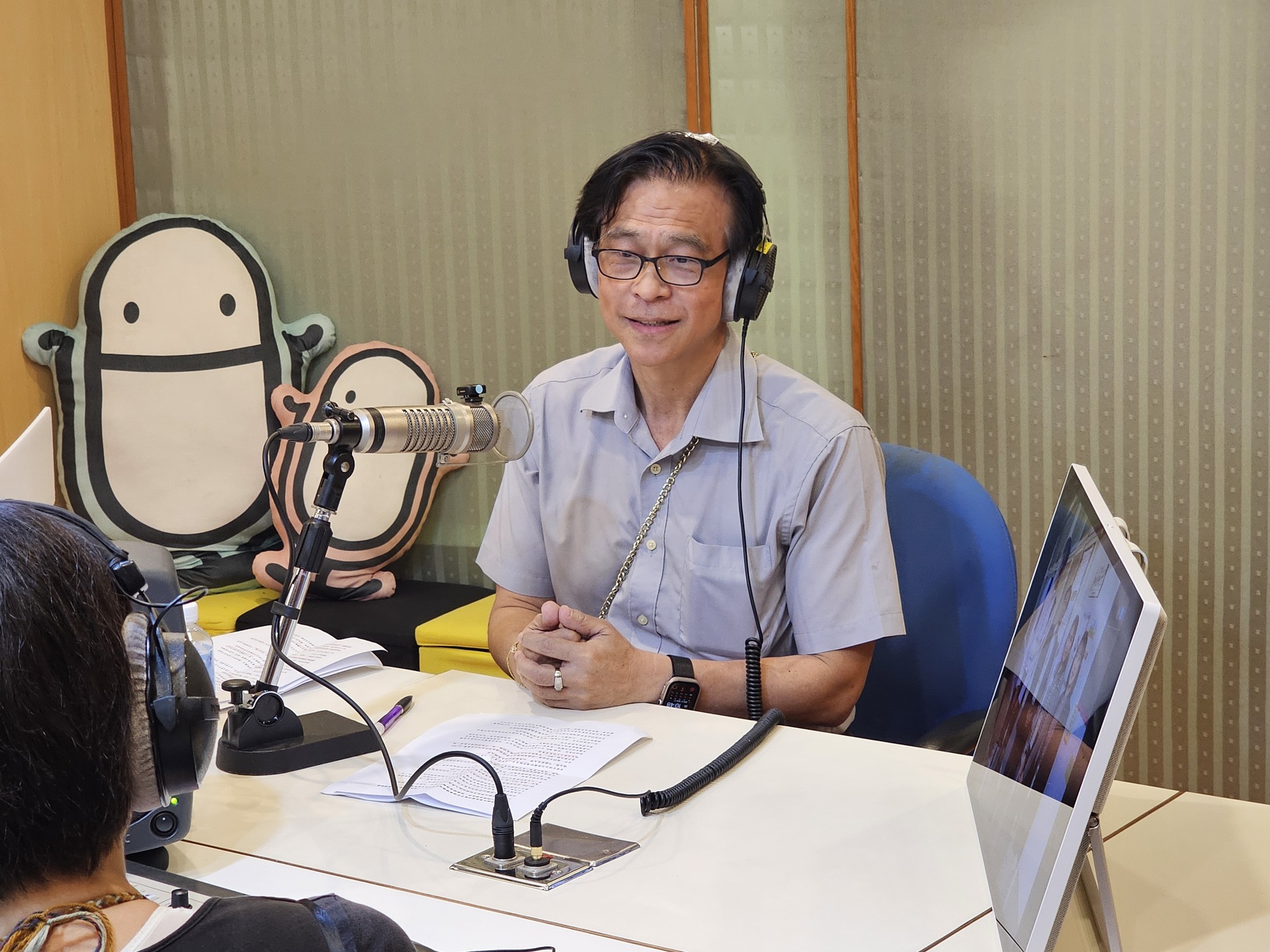
Examining Japanese learning from the perspective of native Mandarin speakers became a major focus of Director Chern's research.
Culture Lies Behind Language: Real Communication Goes Beyond Textbooks
Alongside language teaching and research, Chern has long emphasized the importance of the idea that culture lies behind language. Many learners focus on vocabulary and grammar, he noted, but understanding cultural backgrounds often has the greatest effect on successful communication.
Drawing on his own experience in Japan, he observed that some people mistake Japanese people for being distant, when what they encounter is often cultural reserve and indirectness. By taking part in activities and stepping outside one's comfort zone, it is often possible to form deep relationships. In his classes, therefore, he not only teaches language but also shares Japanese culture, everyday customs, and observations about society, hoping that students will use language to understand the values and ways of thinking of different countries.

Language learning involves more than vocabulary and grammar; it also requires understanding different cultural backgrounds and ways of thinking.
“Language is more than a means of communication; it is a key to understanding the world.”
From the Dajia Mazu Pilgrimage to Maolin's Indigenous Communities: Introducing International Students to Everyday Taiwan
This philosophy is reflected in the Language Center's activities. In recent years, National University of Kaohsiung has taken international students to the Dajia Mazu Pilgrimage, Maolin's Indigenous communities, Taiwanese seasonal celebrations, and professional baseball games. Through firsthand encounters in real settings, the Center hopes students will discover the diversity of Taiwanese society and culture.
Chern stressed that cultural understanding is essential to language learning. Many international students previously knew Taiwan mainly through textbooks and information online. Participating in cultural activities improves their ability to use the language and deepens their understanding of the human dimension and values of Taiwanese society. To him, these activities are more than cultural visits: they are an important part of international education and intercultural exchange in practice.

The interview also featured the teaching and cultural exchange activities organized by NUK's Language Center.
◎ Related Activity Highlights (Click a Title to View)

The Language Center's achievements in teaching, cultural experiences, and international exchange were also an important part of the interview.
Strengthening Second Foreign Language Education and Preparing Southeast Asian Language Talent Early
Beyond his work at the Language Center, Chern has long been involved in second foreign language education and the promotion of Southeast Asian languages. Before the New Southbound Policy was introduced, National University of Kaohsiung had already begun developing Vietnamese and Thai courses and collaborating with the Sirindhorn Thai Language Institute at Chulalongkorn University in Thailand to administer Thai proficiency tests. Over the years, test takers have expanded from students to personnel from government agencies, businesses, and the military, showing that Southeast Asian language skills are becoming an important advantage for professionals across disciplines.
NUK also continues to participate in the Ministry of Education's high school second foreign language program, helping high school students encounter languages such as Japanese, Korean, and Thai. Chern believes that studying a second foreign language not only builds language skills but also gives students a valuable opportunity to explore their interests and career directions.

NUK's Language Center and Continuing Education Center continue to advance second foreign language education and intercultural learning.
In an Age of AI and Digital Technology, Intercultural Skills Remain Irreplaceable
Amid the rapid development of AI and digital technology, Chern believes that translation tools can help people understand information, but technology cannot fully replace cultural understanding, interpersonal interaction, or intercultural communication skills. To him, learning each new language is like opening another window: it reveals a wider world and allows people to rediscover themselves from different perspectives. This is the most precious value of language education.

Even as technology advances rapidly, cultural understanding and human interaction remain irreplaceable values of language education.
About Tea Time and Knowledge in the Community
Tea Time is produced by National Education Radio's Kaohsiung station. Its host, Zhu Ruyu (Ruby), has long focused on education and social issues.
National University of Kaohsiung has a longstanding partnership with the program. In 2026, they launched the Knowledge in the Community segment under the theme of university professors working alongside society. NUK faculty members are invited to share their teaching practices and professional observations, showing how academic knowledge responds to public issues, local needs, and industrial development.

Knowledge in the Community shows how university expertise and educational practice reach society and everyday life in local communities.
Listen to the Full Interview Online
The full interview will air on June 18, 2026 on National Education Radio's Kaohsiung station (FM 101.7).
After release, the program will remain available on National Education Radio's official website for 60 days.
Language Is a Key to Understanding the World
Language opens a window to cultures, people, and the world.